-6-1920x900.png&w=3840&q=75)
Choosing crane outrigger pad size starts with force, not appearance. Many buyers open a catalog with crane tonnage in mind, but the field decision depends on maximum outrigger reaction, footplate contact area, allowable ground bearing, and the safety margin your lift plan requires.
Step one is to collect the lift data that actually matters: crane model, configured boom length, rated load for the planned pick, and maximum outrigger load under that setup. If the reaction value is not available from the lift plan, ask for it explicitly. Tonnage marketing numbers are not a substitute.
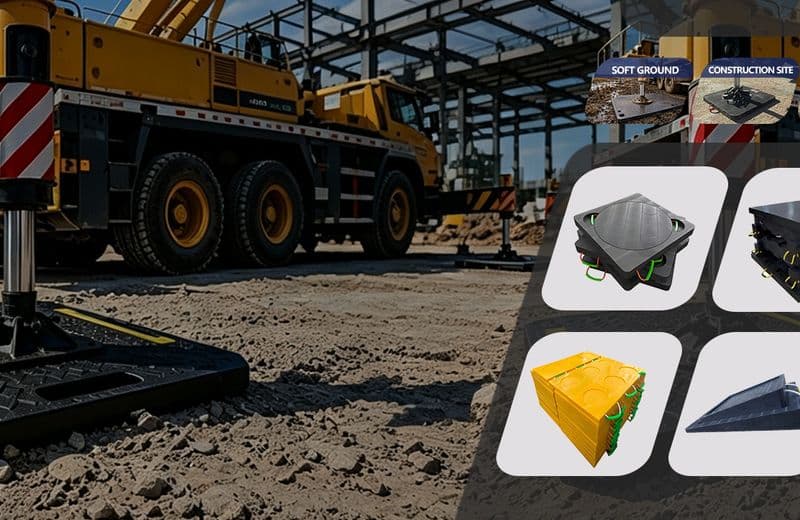
Step two is ground assessment. Gravel, compacted fill, asphalt, and finished concrete behave very differently from wet topsoil, recent backfill, or utility trenches covered only by plate. The pad must spread reaction force across enough area to stay within allowable bearing. On weak ground, the conservative answer is usually larger area, not just thicker material.
Step three is contact geometry. Square pads are common because they align well with standard footplates and are easy to stack, transport, and store. Round pads can still be correct when the setup or storage format demands it. Either way, the pad must fully support the footplate and provide uniform load spreading.
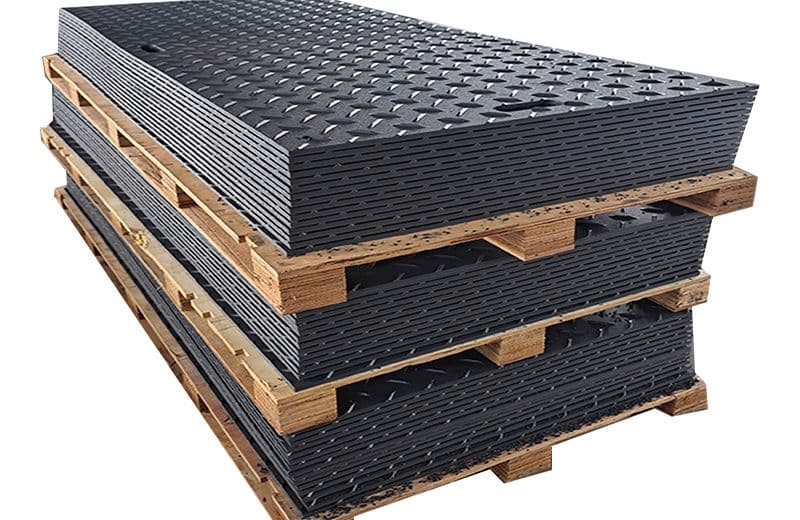
Engineered plastic outrigger pads are widely used because they are lighter than steel plate, easier to redeploy, and less likely to damage finished surfaces. UHMWPE is often selected for high reuse and impact exposure. HDPE can be appropriate where cost and defined structural performance are the primary targets.
Before finalizing a purchase list, confirm thickness, quantity per crane, storage method, and whether the site needs color coding or marked sizes for different lift classes. A sizing guide should help your team standardize pad kits instead of improvising with mismatched plates on every new job.